
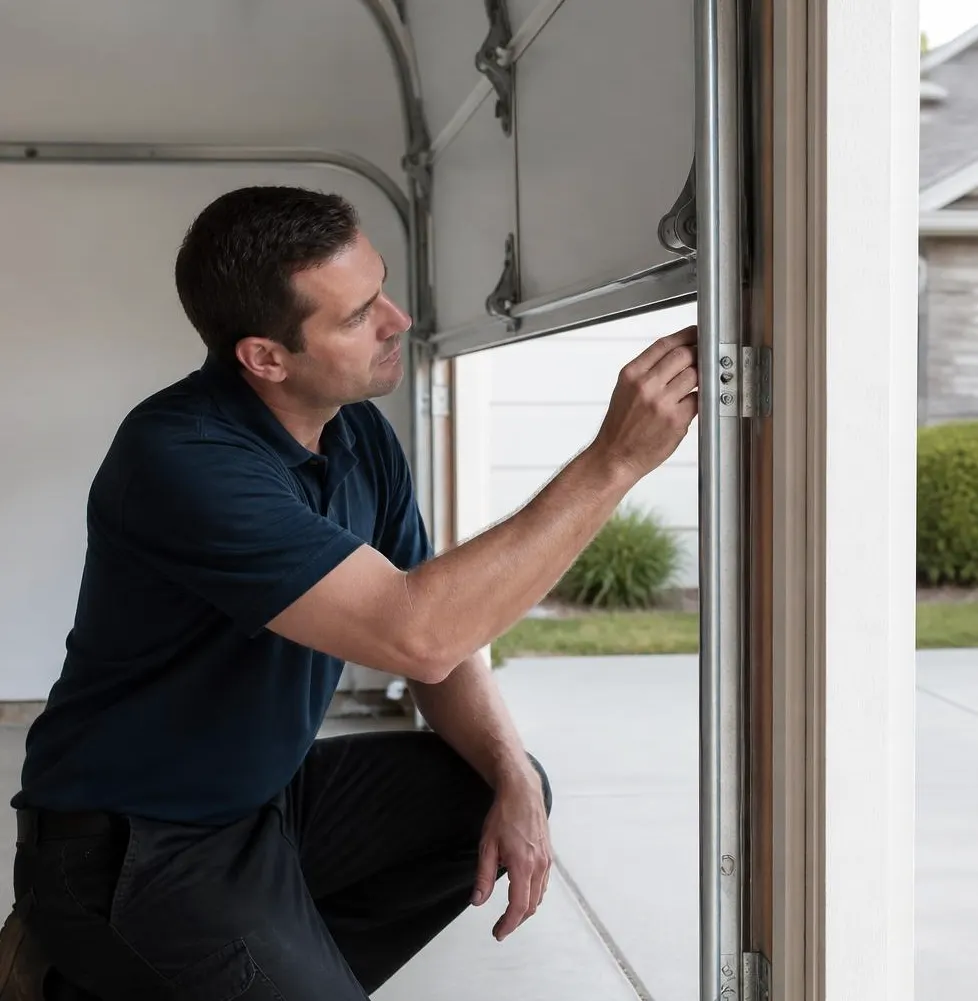
Skip this now and the bill usually comes due in January, during the first real storm. A door that's been baking and collecting dust since spring will tell you about every weak spot the moment rain, wind, and cooler nights show up — a track that binds, a seal that lets water in under the door, a sensor that stops reading because of grime on the lens. None of that is expensive to fix in October. All of it gets more expensive once the door is stuck halfway open during a downpour or a spring lets go while you're late for work.
What a Desert Summer Does to a Garage Door
Months of high heat and dry air aren't gentle on a garage door system, even if nothing looked wrong at the time. Grease and lubricant on rollers and hinges gets thick and dust-caked, UV exposure dries out rubber seals and weatherstripping, and blowing dust works its way into tracks and the opener's moving parts. None of this usually causes a sudden failure in August — it just sets up problems for the season that's actually hard on a garage door here, which is winter.
Tracks and Rollers
Run a cloth along the inside of both tracks. If it comes back gray or gritty, that's compacted dust, not normal wear. Dust mixed with old lubricant forms a paste that makes rollers bind, which forces the opener motor to work harder and strains the springs on every single cycle. Wipe the tracks clean, then relubricate rollers, hinges, and the torsion spring itself with a silicone or lithium-based garage door lubricant — not WD-40, which is a solvent and will actually strip what little lubrication is left.
Weatherstripping Before the Rain Comes
Coachella Valley winters bring real rain, and when it falls it often comes with wind pushing it sideways into garage doors that spent the dry season facing nothing but sun and heat. Check the rubber seal along the bottom of the door and the vinyl stops along the sides and top. After a summer of UV exposure, it's common to find this rubber cracked, brittle, or pulling away from the track — and a cracked seal doesn't leak a little, it leaks exactly where the crack is, every time it rains.
- Bottom seal: look for flattening, cracking, or gaps where it no longer meets the floor evenly — a bowed or uneven garage floor will show this fastest.
- Side and top seals: check for daylight visible around the edges of a closed door; that gap lets in both water and dust.
- Panel seams: on older steel doors, check weep holes and seams for rust starting at the bottom corners, a sign that past rain already got in.
Replacing weatherstripping is inexpensive compared to drying out drywall, repairing a water-damaged opener, or dealing with rust that's started eating into the bottom panel.
Springs and Hardware: Check Before the Door Gets Used Harder
Garage doors get opened more often in winter — more trips for holiday guests, more time spent in the garage once it's not 110 degrees out. That means more cycles on springs and hardware that may already be fatigued from a summer of heat expansion and contraction. Look for:
- Visible gaps or separation in the torsion spring coils
- Rust on springs or cables, especially near the ends where they attach to drums or brackets
- Loose bolts on the brackets holding the track to the frame — heat cycling loosens fasteners over time
- A door that feels noticeably heavier than normal when lifted manually with the opener disconnected, which usually means a spring has lost tension
Springs under tension are genuinely dangerous to adjust or replace yourself. If you see any of the above, that's a job to hand off rather than tackle with a wrench on a Saturday.
Opener and Safety Sensors
The photo-eye sensors near the bottom of the tracks are small, cheap to check, and easy to overlook. Months of blowing dust can coat the lenses enough that the door starts reversing randomly or refuses to close at all — a problem that gets worse once winter mornings bring low-angle sun or glare into the mix. Wipe both sensor lenses with a soft, dry cloth and make sure they're still aimed directly at each other. While you're at it, test the auto-reverse safety feature by placing a block of wood in the door's path and confirming it reverses on contact — this takes two minutes and is the single most important safety check in this whole list.
If the home has a battery backup on the opener, winter is also when it earns its keep: rain and wind bring a higher chance of power outages, and a dead backup battery means a garage door that won't open manually-friendly without knowing the release cord's location in the dark.
Wind, Loose Panels, and Older Hardware
Winter in the valley can bring gusty conditions along with the rain. A door with loose track brackets or worn hinges will rattle and flex more in wind than one that's properly tightened, and over time that flexing stresses the panels and seams. If the home has had earthquake retrofit work done on the garage — reinforced framing or bracing around the door opening — it's worth confirming that bracing is still solid and hasn't shifted, since it affects how much the door frame itself can move.
When to Call Coachella Garage Door
If you're seeing worn springs, a door that's heavier or louder than it used to be, rust starting on hardware, or weatherstripping too far gone to just patch, that's where it makes sense to call in Coachella Garage Door. Our Garage Door Maintenance visits cover the full tune-up — lubrication, hardware tightening, track alignment, and sensor checks — before winter weather exposes a problem the hard way. If a spring is showing wear or has already failed, our Spring Replacement service gets it swapped safely and correctly, which isn't a DIY job given the tension involved.
If your garage door needs attention before the rain rolls in, call Coachella Garage Door today — serving Coachella, CA and the surrounding valley.