
The Moment You Notice Something's Wrong
You're pulling into the driveway at dusk and the garage door is already up an inch, swaying slightly in the evening breeze. Or you walk in from the side yard and see the red emergency release cord hanging lower than you remember, swinging just slightly off its bracket. Nothing's missing. Nothing's broken. But something feels off, and that gut feeling is worth paying attention to, because garage doors are one of the most common ways intruders get into a home, and most of the methods are shockingly low-tech.
How Burglars Actually Get In
Garage break-ins rarely involve dramatic force. They rely on a handful of tricks that work because most homeowners never think to check for them.
- The coat hanger or fishing wire trick: On many standard doors, there's a gap along the top edge. Slide a wire or straightened coat hanger through, hook the emergency release cord, and pull. The door disengages from the opener and lifts by hand in seconds. This works on older doors and any door where the release mechanism isn't shielded.
- Prying at the bottom corner: Years of heat and dry air cause weatherstripping to crack and shrink, leaving small gaps at the corners. A pry bar in that gap, combined with a few hard yanks, can pop a door off its track, especially if the lock points are old or the tracks have loosened.
- Code grabbing on older openers: Fixed-code remotes, common on openers more than 15-20 years old, broadcast the same signal every time. A cheap code-grabbing device can capture and replay that signal to open the door from the street. Newer rolling-code openers generate a new code with every use and aren't vulnerable to this.
- Walking in through an open door: The most common entry method isn't clever at all. It's a door left cracked for airflow on a cooler evening, or left up during yard work, with nobody watching it for ten minutes.
- The weak link between garage and house: Once someone is inside the garage, the door leading into the house is often the flimsiest, least-locked door on the property. Garages are also where tools, ladders, and sometimes a spare key end up stored, handing an intruder exactly what they need to finish the job.
How Bad It Gets
Once someone is in the garage, they're generally out of sight of the street and neighbors, hidden by the closed door, with time to work on the interior door at their own pace. If that door isn't reinforced, a shoulder or a crowbar is often enough. From there they have full access to the house, plus anything stored in the garage itself: tools, bikes, a second vehicle, sometimes a side-by-side or golf cart common in desert properties with detached garages and extra storage space.
Habits and Hardware That Stop It
- Shield the emergency release. A simple zip-tie through the release lever's hole (cut it from inside if the power goes out) blocks the hook-and-pull trick without affecting the manual release in a real emergency. Several companies also sell a hard shield that covers the mechanism entirely.
- Upgrade a fixed-code opener. If your opener is old enough that the remote has a bank of tiny DIP switches instead of a learn button, it's broadcasting a fixed code. Replacing it with a rolling-code opener closes that gap for good.
- Add a slide bolt or floor lock for manual doors. If your door isn't on an opener, a simple interior slide lock keeps it from being lifted even if the outside handle is forced.
- Replace cracked or shrunk weatherstripping. Besides keeping out dust and heat, tight seals mean less gap for a pry bar to find purchase.
- Treat the house-side door like a front door. A solid-core door, a deadbolt, and a strike plate with long screws into the frame make a real difference if someone does get into the garage.
- Don't leave it open and unattended. It sounds obvious, but a door left up for airflow or convenience during yard work is the single easiest way in.
When to Call Coachella Garage Door
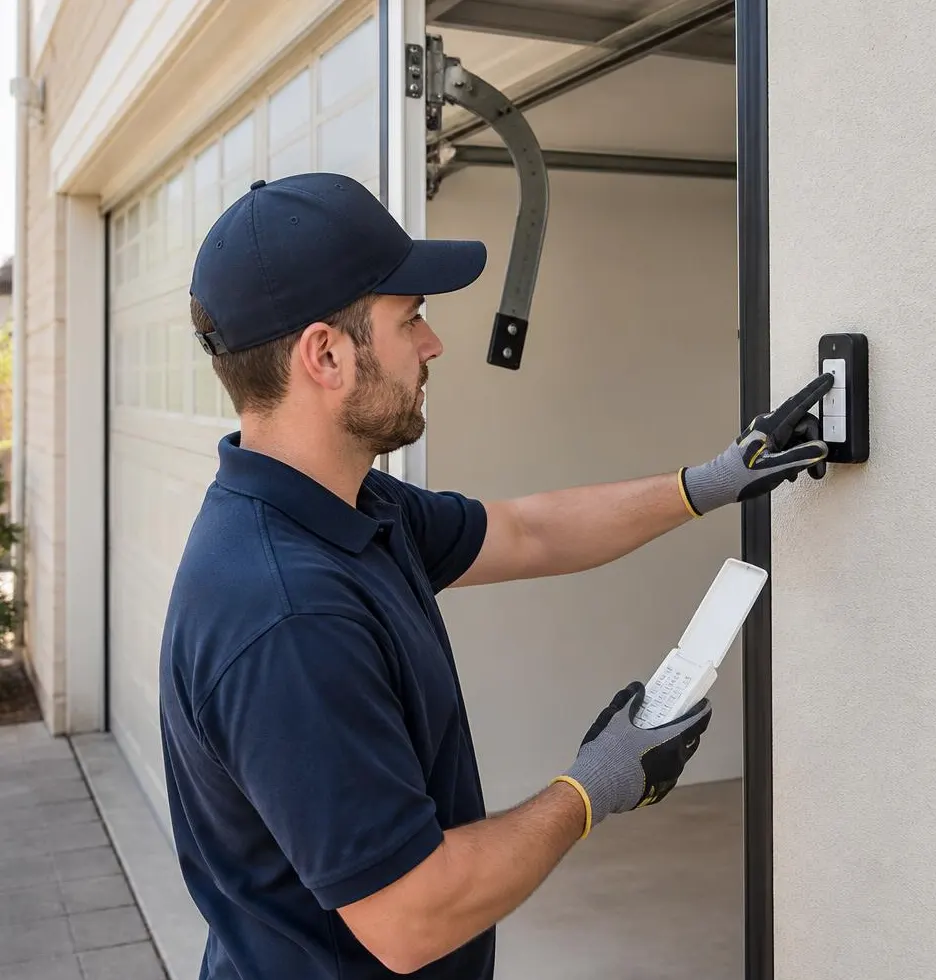
If your opener still uses old-style DIP-switch remotes, if the emergency release looks exposed or has been tampered with, or if weatherstripping has dried out and left gaps at the corners, it's worth having it looked at. Coachella Garage Door handles garage door opener service to upgrade outdated fixed-code systems to secure rolling-code models, and garage door maintenance visits that catch worn seals, loose tracks, and weak points before they become an easy way in.
If you're noticing any of these signs around your garage in Coachella, Indio, La Quinta, or anywhere else in the Coachella Valley, give Coachella Garage Door a call. We'll take a look, tell you straight what needs attention, and get it fixed right.