
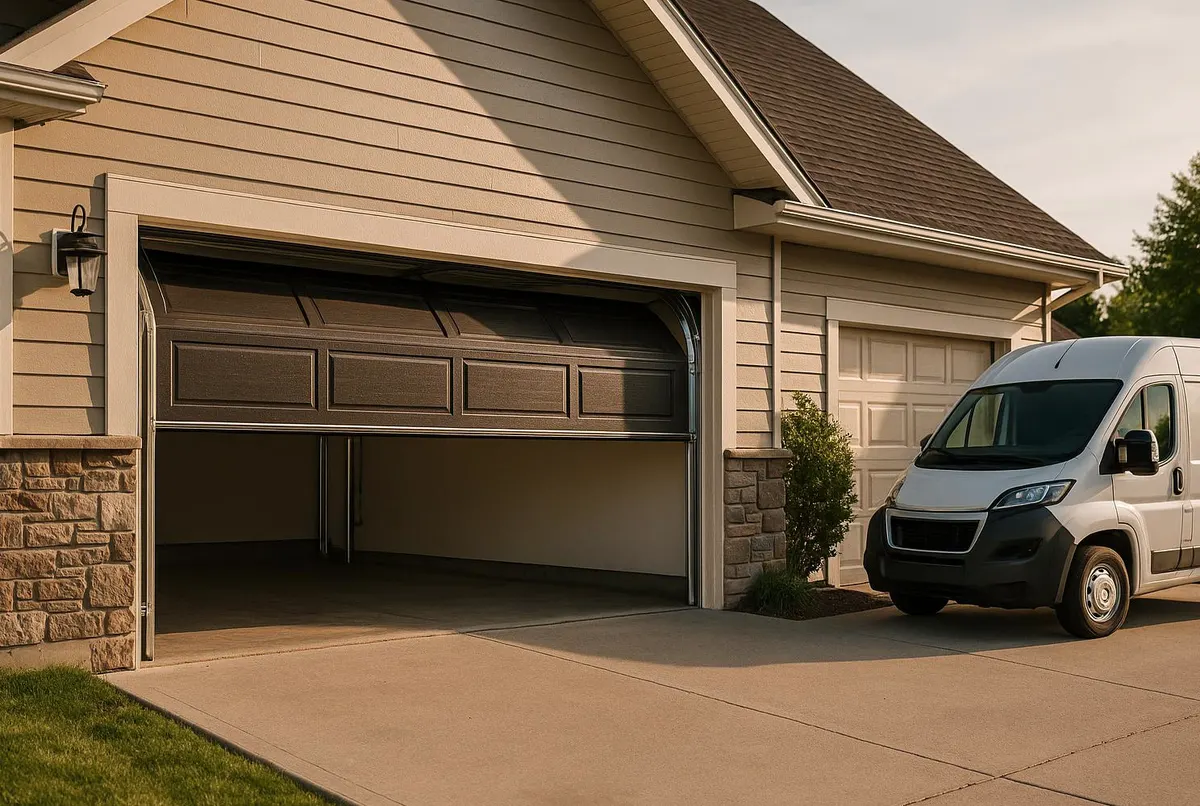
What One More Storm Season Without Prep Actually Costs
Skip this and the bill isn't hypothetical. A garage door that buckles under wind pressure doesn't just need a new panel — it can take the track, the opener, and sometimes a chunk of the header wall with it. Once the door fails, wind gets inside the garage and pushes up on the roof from underneath, which is how homes lose shingles, sheathing, or worse in a single gust event. Add in whatever's parked or stored in there, and a few hundred dollars of preventive work turns into a five-figure insurance claim and weeks without a functioning garage. The desert's wind events and winter rain don't wait for a convenient time, so the only real choice is doing this before or after the damage.
Why the Garage Door Is the Weakest Wall in the House
Every other wall on a home is a continuous, braced structure. The garage door opening is not — it's the single largest unsupported gap in the building envelope, covered by a door made of thin steel or aluminum panels, held in place by tracks, rollers, and hardware that are rated for daily lifting, not necessarily for sustained wind pressure. When wind hits a closed house, pressure builds on the windward side and drops on the leeward side. A garage door that isn't reinforced can bow, buckle, or blow entirely out of its tracks under that pressure differential, and once it's gone, the whole pressure equation inside the house changes instantly and violently. This is exactly why building codes in wind-prone regions call out garage doors specifically for wind-load ratings, separate from the rest of the structure. If your home has had seismic retrofitting done, treat the garage opening with the same seriousness — it's already one of the more structurally significant openings in the house.
Signs Your Door Isn't Ready
- Visible flex or oil-canning in the panels when the door is closed and wind pushes on it.
- Builder-grade tracks that look thin, especially on older homes that have never been upgraded.
- Rollers and hinges with visible wear, rust, or play — these are the first things to fail when a door is stressed sideways by wind.
- Weatherstripping that's cracked, flattened, or missing sections along the bottom and sides.
- No horizontal reinforcement strut on the back of the door, which is common on older or lower-end installations.
- An opener with no battery backup, which matters when wind events knock out power and you need the door operable (or you need to manually lock it shut).
Reinforcing the Door Before Wind Season Peaks
- Add or upgrade horizontal struts. A retrofit wind-bracing kit spans the width of the door on the inside and stiffens the panels against bowing. This is one of the highest-value upgrades for an older door that wasn't originally built to a wind rating.
- Check and upgrade track anchoring. Tracks should be lag-bolted into solid framing, not just sheet metal screws into trim. Loose or thin anchoring is a common failure point in a serious gust.
- Inspect springs under tension, not casually. Springs absorb a lot of the stress when a door is pushed and pulled by wind gusts over and over. A spring that's near the end of its cycle life is more likely to snap under that extra load, usually at the worst possible moment.
- Replace worn rollers and hinges. Nylon rollers with sealed bearings run quieter and handle lateral stress better than old steel rollers that have been in service for years.
- Seal the perimeter. New bottom seal and side/top weatherstripping keep wind-driven rain and blowing dust out, and they also reduce the pressure that can get under the door and lift it.
- Add opener battery backup. Power outages during storms are common, and a battery backup means you're not stuck manually wrestling a heavy door closed in high wind.
What This Valley's Weather Specifically Does to a Door
Wind here doesn't arrive politely — it tends to come in sustained, forceful events rather than brief gusts, and it often carries dust with it. That dust works into tracks, rollers, and the opener's drive system, turning a smooth-running door into one that binds, grinds, or reverses unexpectedly — right when you need it to seal tight. Then winter rain follows, and any gaps the dust and wind have opened up become water intrusion points, soaking stored items and sometimes reaching electrical components near the garage floor. Preparing for wind and preparing for rain are really the same job here: a tight, well-sealed, structurally sound door handles both.
When to Call Coachella Garage Door
If you've noticed panel flex, a strut that isn't there, worn rollers, or weatherstripping that's given up, that's the point to call rather than wait for the next wind advisory. Our garage door maintenance visits cover a full inspection of tracks, hardware, and seals, and we'll flag anything that won't hold up to a real wind event before it becomes a failure. If your springs are showing age or fatigue, our spring replacement service handles that safely — springs are under serious tension and not a DIY repair. For homes with genuinely undersized or unreinforced doors, we can also talk through installation options built for higher wind resistance.
Coachella Garage Door serves Coachella, Indio, La Quinta, Thermal, Mecca, Palm Desert, Cathedral City, and Desert Hot Springs. If your garage door hasn't been checked ahead of this season's wind and rain, call us in Coachella, CA today and get it handled before the next storm tests it for you.